
Welcome opportunity as office working on the rise
Britain was named Europe’s work from home capital in the aftermath of covid-19, with employees spending more days away from the office than in any other nation across the continent. But this status might need to be revisited because of the growing number of employers now stipulating that more time must be spent in the office.

Research from King’s College London in May 2025 found UK workers spent an average of 1.8 days working from home per week compared with a global average of 1.3 days. Only Canada – with its 1.9 days at home – surpassed the UK from the 40 global nations studied. The report stated: “This isn’t just a post-pandemic hangover – British workers have clearly decided they’re not going back to the old days.”
Not so fast with that conclusion. Employers have had other ideas, with many indicating the days of the work-from-home bonanza are slowly coming to an end. As many as 48% of businesses now expect their employees to spend all their working days in the office, according to the British Chambers of Commerce, which compares with a much lesser 27% in 2023.
Businesses including AO World, THG, Boots, Amazon and various banks such as Goldman Sachs and JP Morgan have been demanding five days per week returns to the office. The move is clearly widespread, judging by the demand for office property market across the UK, with 30.5% of office opportunities already sold or under offer, according to BPS London.
This has been reflected in the bounce-back of Canary Wharf, which looked to be in serious trouble in the post-pandemic office working gloom, but it is currently experiencing the strongest demand for office leases in the past ten years, with occupancy levels hitting 89.2% in 2025. JP Morgan recently announced it is to build a European headquarters in Canary Wharf to house 12,000 employees.
The implications of all this for hospitality businesses that are exposed to locations with office blocks seems obvious. The greater numbers of workers in the office have driven a rise in weekday lunch bookings, with an increase of 4% experienced last year versus 2024, according to OpenTable, which also found diners spending 8% more per person on business meals.
A conclusion from this is that the midday meeting has become an occasion for higher value dining rather than the quick-and-functional lunch. This has certainly been recognised by Los Mochis and its City of London restaurant, with its owner, Marcus Thesleff, stating he is “very excited about the City” and that the unit has been a big success on the back of a much higher average spend than other restaurants in the capital.
Highlighting the increased spend flowing to work-related dining is the recent launch of Deliveroo for Work (that follows Just Eat for Business), with the company suggesting “the office lunch is officially back”. It takes advance orders for group bookings for deliveries to offices, with group-friendly menus designed for the workplace available from select restaurants including Pizza Pilgrims, The Salad Project, Bleecker Burger and Sushi Dog. The dedicated service comes on the back of a serious 60%-plus increase in corporate orders on the platform between 2022 and 2025.
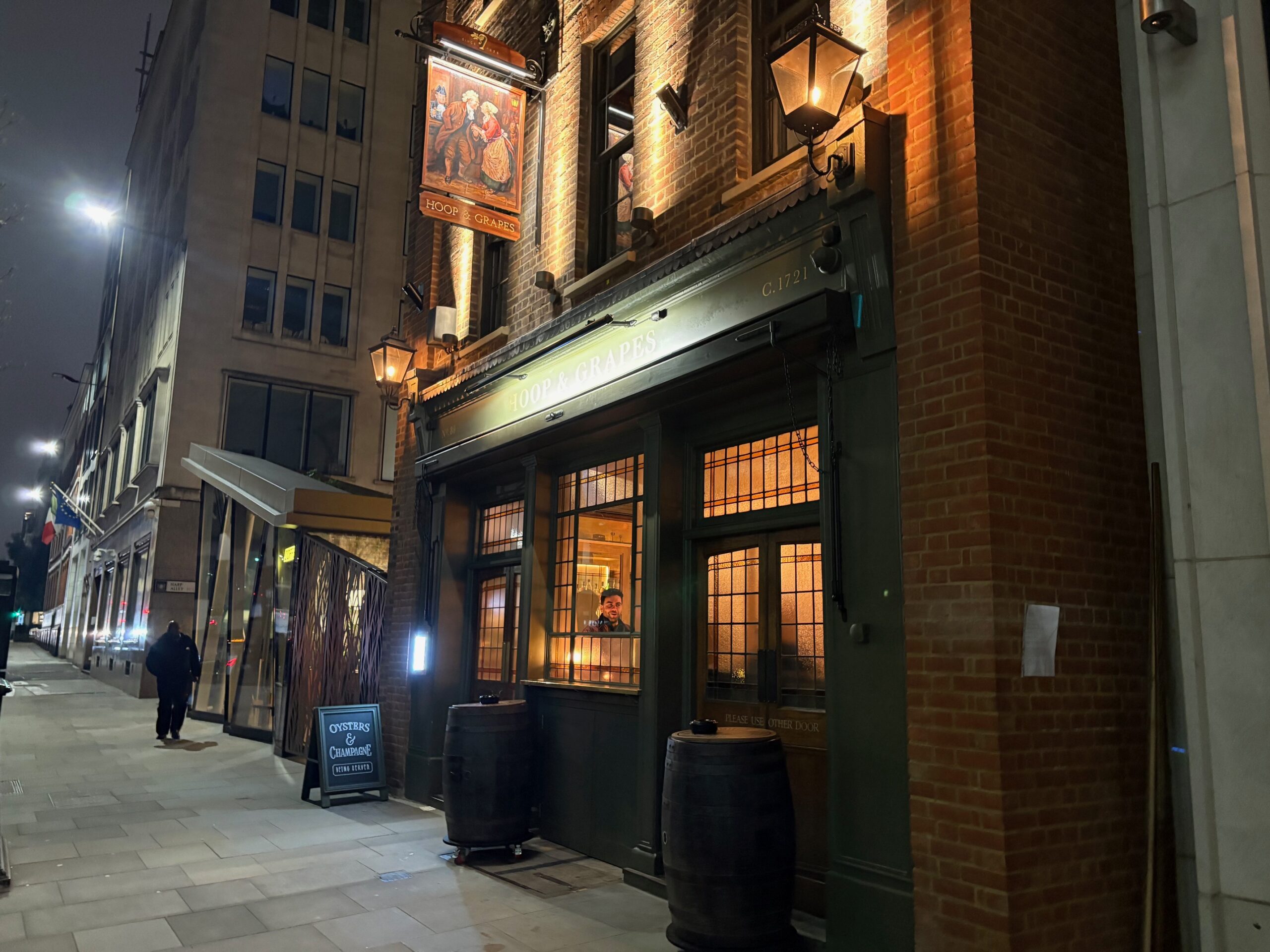
I’ve seen first-hand evidence of the increased buoyancy of hospitality in the City and office-heavy environments when visiting the reopened Shepherd Neame-owned Hoop & Grapes in Farringdon Street, which had been closed since mid-2020, when the offices around it were all being redeveloped. It now finds itself with people dining and spilling out on to the street at lunchtime and post-work. On my Friday early-evening jaunt to this historical pub, it was mobbed.
Jonathan Neame, chief executive of Shepherd Neame, has suggested: “It’s surrounded by offices, and more and more people are coming back to the office. It’s now [moved to] more five-day [trading] in the City and seven-day elsewhere. The Hoop & Grapes is a classic chameleon pub – switching from being a great drinking pub on a Thursday to a more sedate dining pub midweek.”
The return to the office and the dilution of the work-from-home phenomenon has very much been a slow-burn that has undoubtedly surprised many people who have grown to assume hybrid working has been the new ingrained dynamic. Although we will likely never return to the office working levels of the pre-pandemic era, the UK’s shift away from its status as the work-from-home capital of Europe undoubtedly represents a much welcome opportunity for many hospitality businesses.
Glynn Davis, editor, Retail Insider
This piece was originally published on Propel Info where Glynn Davis writes a regular Friday opinion piece. Retail Insider would like to thank Propel for allowing the reproduction of this column.